













Inland Real Estate Income Trust Narrows Losses
The non-traded grocery-anchored REIT navigates leadership changes, tenant bankruptcies, and limited liquidity options while maintaining steady cash flows from its 52-property portfolio.
March 12, 2026

Inland Real Estate Income Trust Narrows Losses As Strategic Direction Remains Uncertain
The non-traded grocery-anchored REIT navigates leadership changes, tenant bankruptcies, and limited liquidity options while maintaining steady cash flows from its 52-property portfolio.
Inland Real Estate Income Trust, Inc., a non-traded real estate investment trust focused on grocery-anchored retail properties, reported its annual financial results for 2025, revealing a narrowing net loss and steady cash flows even as the company grapples with strategic direction, leadership transitions, and constrained capital resources.
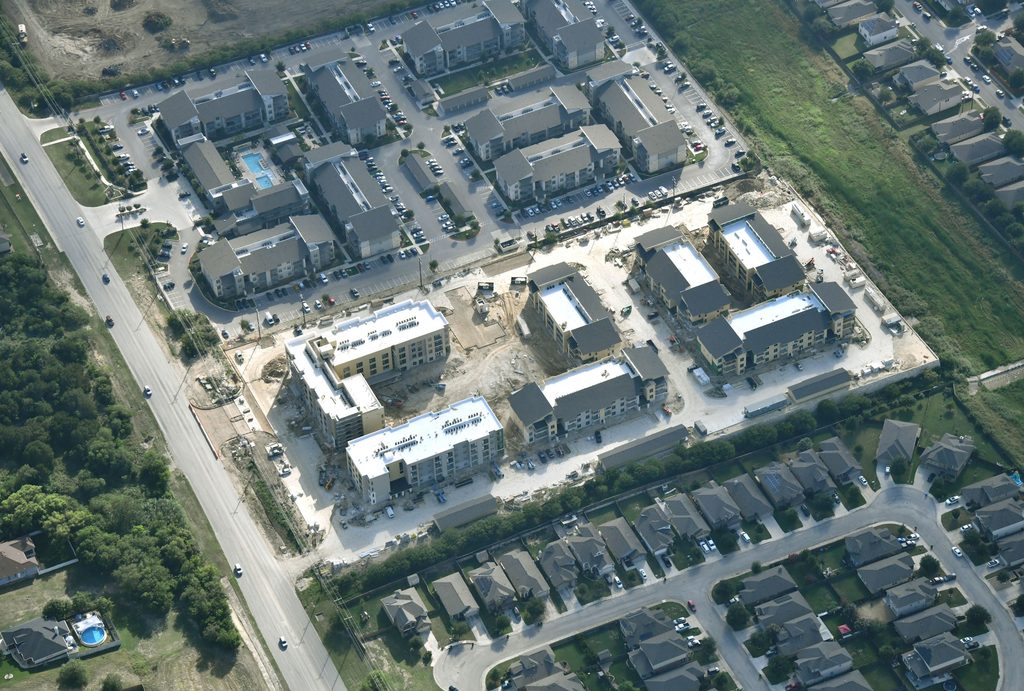
The Oak Brook, Illinois-based REIT, which owns 52 retail properties totaling 7.2 million square feet across 24 states, posted a net loss of $11 million for the year ended December 31, 2025, an improvement from losses of $15 million in 2024 and $15.1 million in 2023. The improvement was driven primarily by lower depreciation and amortization charges and reduced interest expenses, though rising operating costs partially offset those gains.
Portfolio Performance Holds Steady
As of year-end 2025, the company’s portfolio maintained physical occupancy of 92 percent and economic occupancy of 92.2 percent, down modestly from 93.1 percent and 93.4 percent the prior year. Annualized base rent per square foot averaged $19.57 across the portfolio, essentially flat compared to $19.72 in 2024. Grocery-anchored or grocery shadow-anchored properties continued to dominate the portfolio, representing 87 percent of annualized base rent.
The company reported no property acquisitions or dispositions during 2025, marking the third consecutive year without transaction activity. Leasing activity during the year included 153 leases covering more than 841,000 square feet, with comparable renewal leases showing a 6.3 percent increase in contractual rent and comparable new leases achieving a 12.1 percent increase.
Several tenant disruptions affected the portfolio during the year. Party City, which had leased space at four properties, filed for bankruptcy in late 2024 and closed all four locations by March 2025. The company has executed replacement leases for two of those spaces while marketing the remaining two. Additionally, Rite Aid filed for bankruptcy in May 2025 and vacated one property by August. American Freight’s bankruptcy filing in late 2024 also left a vacancy at Harris Plaza, triggering co-tenancy issues at that location.
Strategic Review Yields No Liquidity Event
One of the most significant developments for shareholders was the board’s decision not to pursue a sale of the company following a review of strategic alternatives that began in late 2024 and continued through 2025. The board has instead directed the Business Manager to evaluate the company’s business plan and consider alternatives that could increase assets and cash flow while eventually providing liquidity to stockholders.
There is no established public trading market for the company’s shares. The board reported an estimated per share net asset value of $16.89 as of September 30, 2025, representing a decline of $2.28 from the prior estimate. The company acknowledged that future NAV estimates may continue to decline and cautioned that the valuation represents only a snapshot in time.
The company’s distribution reinvestment plan and share repurchase program, both suspended in October 2024 during the strategic review, were reinstated effective February 1, 2026. Under the revised repurchase program, ordinary share repurchases will be made at 80 percent of the current estimated NAV, while repurchases related to death or disability of a stockholder will be at the full estimated NAV. No shares were repurchased and no distributions were reinvested during 2025 due to the suspension.
Leadership Transition
The company underwent a significant leadership change when former president and chief executive officer Mark Zalatoris departed on February 2, 2026, following the expiration of his agreement with the company. Bernard Michael, who had served as an independent director since 2014, was elected as the new president and CEO effective the same date. Unlike Zalatoris, whose compensation was paid directly by the company and offset against fees owed to the Business Manager, Michael will be compensated by the Business Manager or its affiliates, meaning the company will no longer receive a dollar-for-dollar reduction in its management fees.
Catherine Lynch, who previously served as chief financial officer, transitioned to chairperson of the board in May 2025. Jerry Kyriazis assumed the CFO and treasurer roles at that time. Alan Feldman joined the board as an independent director in January 2026, and Stephen Davis was named lead independent director.
Financial Position and Debt
The company’s total debt stood at approximately $841.7 million as of year-end, up slightly from $837.7 million a year earlier. The weighted average interest rate on the debt was 4.65 percent, with a weighted average maturity of 3.2 years. In November 2025, the company refinanced its credit facility, increasing total commitments from $775 million to $860 million, with the revolving credit facility expanding from $200 million to $285 million.
As of December 31, 2025, the company had $248 million outstanding on its revolving facility and $575 million on its term loan, with only $37 million available for additional borrowing. The leverage ratio stood at 57 percent against a covenant maximum of generally 65 percent. In January 2026, the company drew $19 million on the revolving facility to pay off its sole remaining mortgage on the Milford Marketplace property.
Cash flows from operations totaled $42.7 million, down slightly from $43.3 million in 2024, while capital expenditures increased to $22 million from $13.9 million the prior year. The company paid $19.6 million in distributions during 2025, entirely funded from operating cash flow, maintaining a quarterly distribution rate of approximately $0.1356 per share.
Outlook and Risks
The company highlighted numerous risks facing its business, including the ongoing shift toward e-commerce, rising operating expenses that outpaced inflation during 2025, potential impacts from tariffs and trade policy uncertainty, and the challenges of operating without a public trading market for its shares. Operating expenses increased 8.4 percent year over year, exceeding the 2.4 percent consumer price inflation rate reported for the period.
Funds from operations, a key REIT performance metric, rose to $46.2 million from $45.8 million in 2024, while modified funds from operations declined to $44.2 million from $45.5 million. As of March 10, 2026, the company had approximately 36.1 million shares outstanding held by roughly 15,954 stockholders of record.