














Opportunity Zone (OZ)

An Opportunity Zone is a designated low-income census tract where qualifying investments receive federal capital-gains tax benefits: deferral of the invested gain, a partial basis step-up, and — the centerpiece — tax-free appreciation on investments held at least ten years. The program, created in 2017, was made permanent and substantially revised by the 2025 tax law, with the new “OZ 2.0” rules applying to investments made on or after January 1, 2027.

How the incentive works

An investor who realizes a capital gain — from stock, real estate, a business sale, crypto — can defer it by reinvesting the gain within 180 days into a Qualified Opportunity Fund (QOF), the vehicle through which all OZ investing flows. Three benefits attach: the original gain’s recognition is postponed; a portion of that deferred gain is forgiven via a basis step-up if the investment is held long enough; and appreciation on the QOF investment itself escapes tax entirely at the ten-year mark. Only gains (not principal generally) qualify for the benefits, and the incentive is designed to push patient capital into designated communities.

The transition every investor is living through right now

This is the rare glossary term where the date matters as much as the definition.

OZ 1.0 (investments made through December 31, 2026): all gains deferred under the original program are recognized on December 31, 2026, regardless of when invested — a fixed cliff now months away. Investors holding OZ 1.0 positions face a known 2026 tax event (with planning levers such as loss harvesting and valuation-based gain measurement), while the ten-year exclusion on their QOF investment’s own appreciation survives intact. The original zone designations remain usable for new investment through the end of 2026 and expire at the end of 2028.

OZ 2.0 (investments made on or after January 1, 2027): the fixed cliff is replaced by a rolling five-year deferral — each investment’s deferred gain is recognized five years after that investment (or on earlier sale). A 10% basis step-up applies at the five-year mark, rising to 30% for the new Qualified Rural Opportunity Funds, which also enjoy a halved substantial-improvement requirement. The ten-year tax-free appreciation benefit continues, now with a thirty-year outer limit at which basis locks at fair market value. New, stricter zone maps — designated by governors by mid-2026 — take effect January 1, 2027, and the program repeats on a ten-year cycle with enhanced fund reporting requirements. Notably, IRS guidance confirms that gains recognized at the 2026 cliff cannot be re-deferred into OZ 2.0.

For advisors, the transition creates a genuine timing decision: gains realized in late 2026 may, depending on the 180-day window, be deployable under the new regime, and rural-focused funds carry meaningfully richer benefits than the original program ever offered.

What OZ investing requires

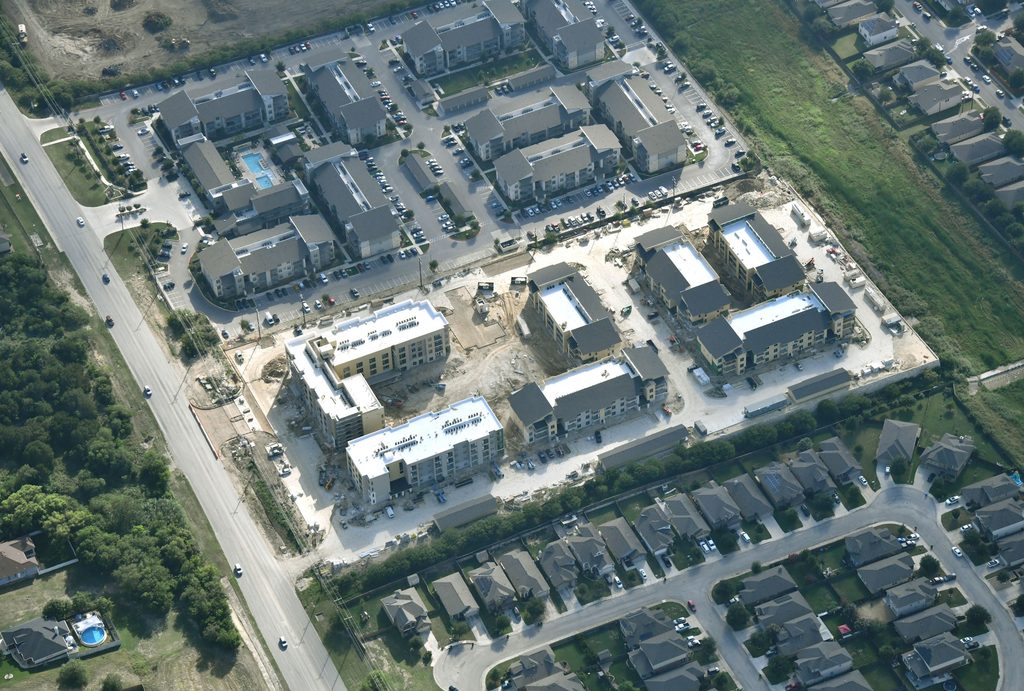
Benefits come with real-economy strings. QOFs must keep 90% of assets in qualifying zone property, and existing buildings generally require substantial improvement. These are development-risk investments — ground-up projects and heavy rehabs in designated tracts — with ten-year horizons as a practical minimum for the headline benefit, illiquidity throughout, and sponsor execution as the dominant risk. The tax tail should not wag the underwriting dog: a mediocre project with OZ benefits is still a mediocre project held for a decade.

FAQ

What is an opportunity zone in simple terms?

A designated lower-income area where the tax code rewards investing capital gains: your original gain is deferred and partially reduced, and if you hold the new investment ten years, its appreciation is tax-free.

What happens to opportunity zones after 2026?

The program becomes permanent with revised rules. Investments made from 2027 onward get a rolling five-year deferral, a 10% step-up (30% in rural funds), and new zone maps; gains deferred under the original program are recognized December 31, 2026.

Can any investment go into an opportunity zone fund?

Only realized capital gains qualify for the tax benefits, and they must reach a Qualified Opportunity Fund within 180 days of recognition.

Are opportunity zone investments risky?

They carry development and sponsor risk, long lockups, and geographic concentration by design. The tax benefits improve after-tax outcomes on successful projects; they don’t rescue unsuccessful ones.

Qualified Opportunity Fund (QOF) · 1031 Exchange · Stepped-Up Basis · Depreciation Recapture · Accredited Investor

Educational content only; not investment, tax, or legal advice. Consult qualified professionals regarding your specific circumstances.

Subscribe to our Newsletter