Drone Delivery Company Matternet Goes Public Through Reverse Merger
The autonomous aerial logistics firm paired its market debut with a $27.6 million private placement as it races to scale commercial operations despite mounting losses.
June 2, 2026
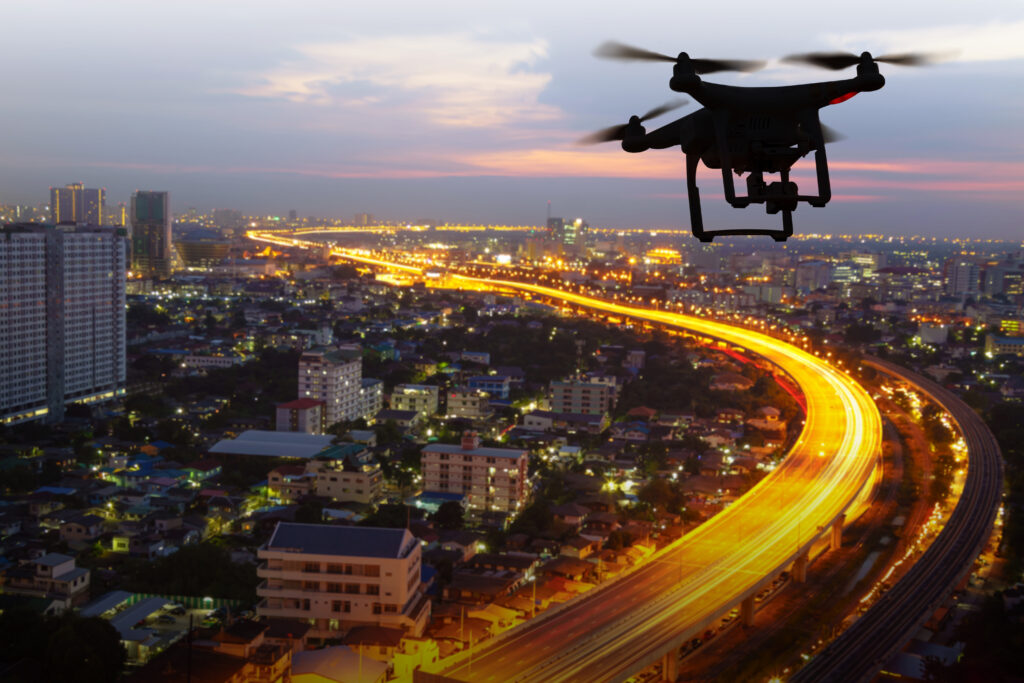
Matternet, Inc., a developer of commercial drone delivery systems, has become a public reporting company after completing a reverse merger that converted a former shell corporation into the operating business of one of the longest-running names in autonomous aerial logistics.
How the Deal Came Together
The transaction closed on May 22, 2026. A private Delaware company known as Legacy Matternet combined with a subsidiary of Los Altos Ventures Corp., a shell entity incorporated in June 2025. Once the deal took effect, Los Altos Ventures renamed itself Matternet, Inc., while the operating business was renamed Matternet Operations, Inc. and now sits as a wholly owned subsidiary. Each share of the legacy company was exchanged for roughly 2.08 shares of the public company, and the combined entity ceased to qualify as a shell company.
Because the deal is treated as a reverse acquisition for accounting purposes, the operating business is considered the acquirer, and its historical results will carry forward in future reports to regulators.
A $27.6 Million Capital Raise
Alongside the merger, the company raised capital through a private placement, selling about 9.2 million shares at $3.00 each to accredited and institutional investors for gross proceeds of roughly $27.6 million. After paying placement agents and other expenses of about $6.9 million, net proceeds came to approximately $20.7 million. A group of broker-dealers — including Seaport Global Securities, The Benchmark Company, Dinosaur Financial Group, Network 1 Financial Securities, and Phoenix Financial Services — handled the offering, receiving $2.1 million in cash fees and warrants covering more than 666,000 shares.
The company used $4.2 million of the proceeds to immediately retire outstanding promissory notes and plans to direct the balance toward operations, fleet expansion, geographic growth, and continued technology development. The deal also resolved earlier bridge financing: $6.0 million in secured notes issued in March 2026, carrying 10 percent interest, converted at closing into roughly 2.5 million shares at $2.40 each, with holders receiving warrants for a matching number of shares. After the merger, share forfeitures, the placement, and advisor shares, the company had nearly 48 million shares outstanding.
A Decade of Drone Delivery Milestones
Founded in 2011 and based in Mountain View, California, the company designs and manufactures battery-powered delivery drones along with the ground stations and cloud software that enable largely automated package transport in urban and suburban areas. Its flagship M2 aircraft carries payloads of about two kilograms over a range of roughly 20 kilometers.
Management highlights several regulatory achievements it considers hard for rivals to replicate:
- The M2 was the first non-military unmanned aircraft to earn Type Certification from the U.S. Federal Aviation Administration, in 2022.
- The company says it is the only drone delivery platform holding both that certification and an FAA Production Certificate.
- It began commercial operations beyond visual line of sight over Swiss cities in 2017 and supported the first routine revenue-generating U.S. drone deliveries in 2019 through a partnership with UPS Flight Forward.
- Across more than 60,000 flights in nine countries, it reports no incidents causing injury to people or damage to third-party property.
Business Model and Partnerships
The company earns revenue two ways: by granting enterprise customers access to its platform and infrastructure while those customers run their own operations, and through a delivery-as-a-service model in which certified operators fly the missions. Rather than running its own airline in every market, it relies on partners such as UPS Flight Forward and Ameriflight, the largest Part 135 cargo airline in the United States. In April 2026, it announced a partnership with SoftBank Robotics America to support ground-infrastructure manufacturing and broaden its commercial reach. Current operations focus largely on healthcare logistics in the United States and United Kingdom, plus selected food delivery pilots.
Looking ahead, the company is developing a next-generation aircraft, the M3, designed to carry about five kilograms across a service radius of roughly ten miles, with commercial service targeted for late 2027 — though that timeline remains subject to engineering, certification, and supply-chain risks. Management frames the moment as an industry inflection point, citing progress on a proposed federal framework for routine beyond-visual-line-of-sight flights, policy favoring domestic providers over Chinese-made systems, and rising interest from enterprises such as Walmart, Amazon, DoorDash, and Uber. Its main competitors include Amazon Prime Air, Alphabet’s Wing, and Zipline, each with far greater resources.
Financial Strain and Going-Concern Warning
The financial picture underscores the road ahead. The company posted a net loss of about $31.0 million for the fiscal year ended September 30, 2025, and roughly $7.2 million for the six months ended March 31, 2026, leaving an accumulated deficit near $137.8 million. Cash stood at $4.6 million at the end of March. Its auditor has expressed substantial doubt about the company’s ability to continue as a going concern, warning that existing cash and the new proceeds may not fund a full year of operations. Management also disclosed a material weakness in its internal financial controls, tied partly to a lack of formal accounting procedures and limited segregation of duties.
New Leadership and Trading Outlook
The merger reshaped the leadership team. Founder Andreas Raptopoulos continues as chief executive and a director, joined by Jason Secore as chief financial officer and Alexander Norman-Elvenich as chief operating officer. The board expanded to five members, adding Chris Dawson, Sanjay Kotte, Laurence Marton, and Saurabh Ranjan, with all but Raptopoulos and Ranjan deemed independent.
For now, the stock is not listed on any exchange. The company intends to seek a quotation on the OTCQB market once a resale registration statement becomes effective, and it has agreed to file that statement within 45 days. It cautioned that no active trading market may develop, that its shares could be treated as a penny stock, and that going public through a reverse merger rather than a traditional offering may limit analyst coverage. As an emerging growth company and smaller reporting company, it also plans to use reduced disclosure options available to younger public businesses.