Cantor Fitzgerald Income Trust Fills Half of August Redemptions as Multifamily Doubles
The trust has redeemed $124.9 million of stock to date against $25.9 million raised in its current primary offering.
September 16, 2026

Cantor Fitzgerald Income Trust honored 52.3% of the share repurchase requests it received for August, buying back 211,920 shares for aggregate consideration of $4.4 million. The prorated fill marks a second stretch of rationed liquidity in under a year for the non-traded REIT, which filled 50.7% of December 2025 requests after breaching both its monthly and quarterly repurchase caps.
Net asset value stood at $436.1 million as of August 31, marginally below the $436.9 million reported a month earlier, with 20,986,471 shares and operating partnership units outstanding against 21,183,923 at July 31. Per-share NAV came in at $20.78 for Class AX, IX, I and D, $20.77 for Class T and S, and $20.76 for Class TX. The transaction price for subscriptions accepted as of October 1 was set at $20.78 for Class I and Class D and $20.77 for Class S and Class T.
A Portfolio Remade in Eight Months
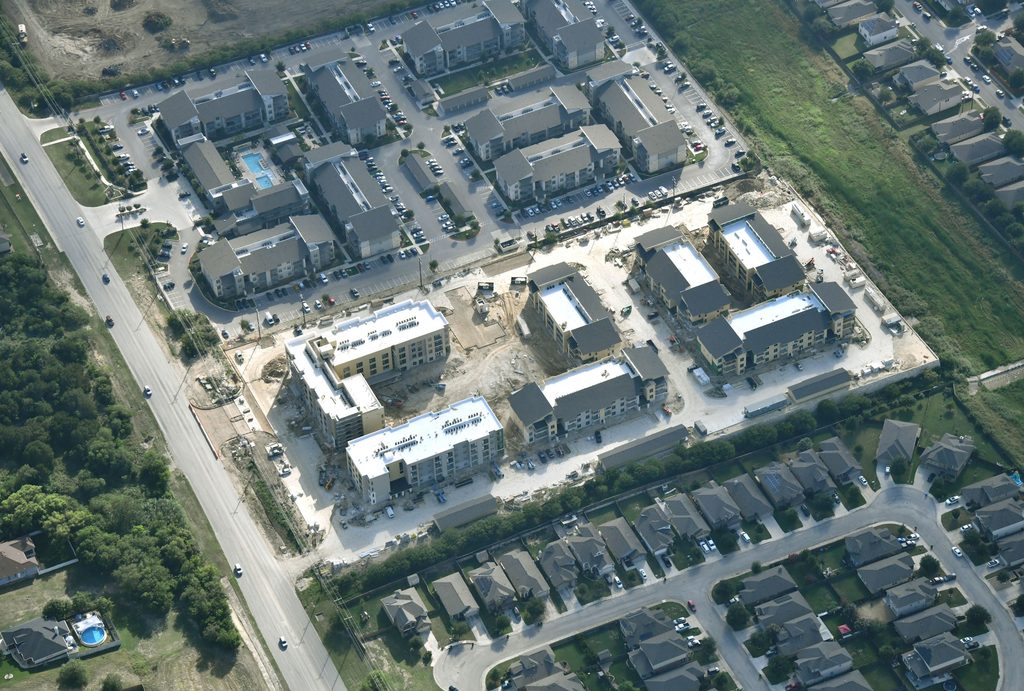
Multifamily now accounts for 51.2% of the real estate portfolio by fair value adjusted for ownership percentage, up from 29.9% at December 31, 2025. Distribution and logistics fell to 8.6% from 24.3% over the same span. Single-tenant office eased to 22.7% from 26.1% and necessity retail to 13.6% from 16.8%, while single-tenant life sciences rose to 2.6% and data center held at 1.4%.
The geographic mix turned over as sharply:
- Georgia entered the book at 11.2% and New York at 8.9%, neither having registered at year-end 2025;
- Ohio dropped to 10.8% from 26.7% and Maryland to 14.4% from 20.8%;
- Texas remains the largest state exposure at 15.9%.
Total real estate assets reached $1.2 billion as of August 31, against $784 million at year-end 2025. The trust closed 2025 with roughly $1.1 billion in total assets across 43 properties. Weighted average occupancy improved to 95.6% from 95.0%, and the weighted average remaining lease term extended to 7.5 years from 7.2.
Where the Capital Is Coming From
The trust is offering up to $1.25 billion on a continuous basis, split between $1.0 billion in the primary offering and $250 million through its distribution reinvestment plan. As of September 1 it had issued 1,280,599 primary shares for $25.9 million and 639,573 reinvestment shares valued at $13.1 million, while redeeming 6,072,474 shares for $124.9 million.
Capital has instead come from the balance-sheet side. Combining the April 8 underwritten public offering of 800,000 Series A Preferred shares with OP unit transactions through August, the trust issued $187.2 million of capital during 2026. The Series A listed on the New York Stock Exchange earlier this year. Liquidity is thin at the operating level: $2.4 million of cash excluding restricted cash and a lender-required reserve, alongside $44.4 million of undrawn credit facility capacity.
Debt obligations carried at fair value totaled $542.2 million. The 2028 maturity wall has eased to 26.6% of secured debt from 39.8% at year-end, with the credit facility making up the bulk and carrying two one-year extension options. Another 34.2% comes due in 2031 and 23.7% in 2032.
Valuation Inputs
Robert A. Stanger & Co. serves as independent valuation firm. Appraisers applied a weighted-average exit capitalization rate of 6.1%, a residual discount rate of 7.3%, and an average holding period of 8.4 years. The reconciliation from $538.3 million of GAAP stockholders’ equity to NAV adds back $171.3 million of accumulated depreciation and amortization and subtracts $39.1 million of unrealized depreciation on real estate.