Treasury Designates 6,576 Opportunity Zones, Including 2,594 Rural Tracts, Effective in 2027
Every tract the states nominated made the final list, and Treasury has posted poverty and income data for each one alongside the full roster of zones.
November 5, 2026
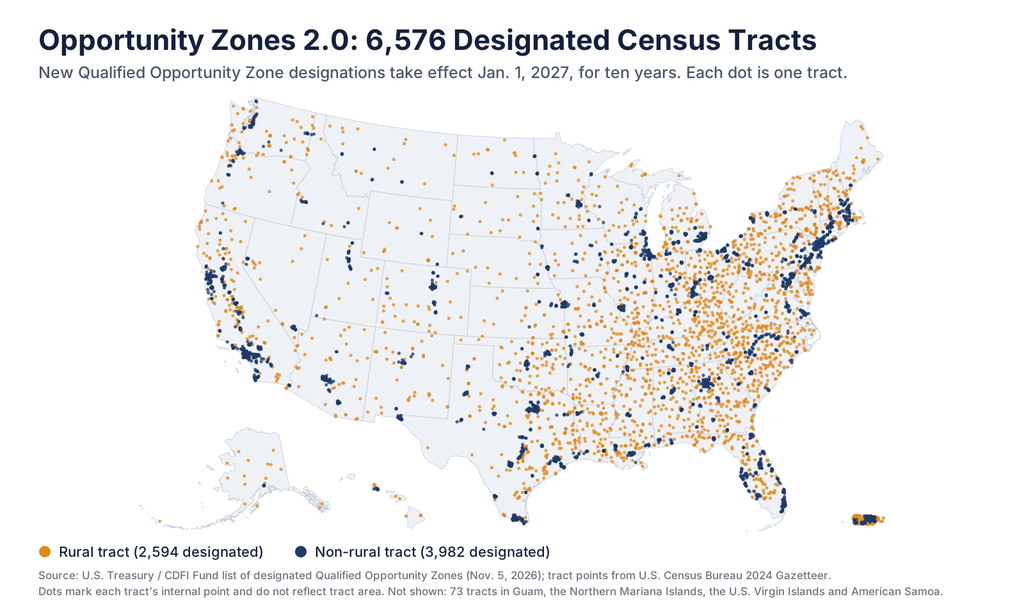
The U.S. Department of the Treasury and the Internal Revenue Service on November 5 designated 6,576 census tracts as Qualified Opportunity Zones across all 50 states, the U.S. territories and the District of Columbia. The designations take effect January 1, 2027, and remain in place for ten years.
Of the designated tracts, 2,594 are in rural areas, which carry enhanced investment incentives under the 2025 tax law Treasury calls the Working Families Tax Cuts, enacted as the One Big Beautiful Bill Act. The law made the opportunity zone incentive permanent and set up a process for redesignating zones every ten years. This is the first designation round under that process.
How the Zones Were Chosen
Treasury and the IRS published a list of 25,332 eligible census tracts on April 6, including 8,334 rural tracts eligible for the increased benefits. Governors and the mayor of the District of Columbia began submitting nominations on July 1. All 6,576 tracts nominated by the close of the statutory window received the designation.
The CDFI Fund has posted the full list of designated zones, which identifies each tract by census tract number, state and county and flags the rural tracts. A map is available through the fund's Community Investment Mapping System, and Treasury's Office of Tax Policy publishes the poverty rate and median family income for each tract.
Investment Record and Sponsor Plans
Treasury said the new round builds on more than $110 billion in private-sector investment made since the Tax Cuts and Jobs Act of 2017 created the opportunity zone incentives. Treasury Secretary Scott Bessent said the permanent program gives investors, entrepreneurs and local leaders the long-term certainty to commit capital to overlooked communities. IRS Chief Executive Officer Frank J. Bisignano said the designations let the agencies target investment and growth where it is needed most.
Griffin Capital Company said in October, when it closed its fourth qualified opportunity zone fund after raising approximately $400 million of investor equity, that it was looking toward a fifth vehicle under the revised framework.